A Love Letter to Social Workers on the Front Lines of COVID-19
Editor’s note: This letter was written by Melanie Sage from the University at Buffalo’s School of Social Work in response to the COVID-19 pandemic. She originally posted it on LinkedIn and is re-published here with her permission. You can follow Melanie on Twitter at @melaniesage.
Social workers are often unsung heroes, and that’s often ok with them. They go about their work in the backgrounds of organizations that are meant to do other things: in hospitals that are meant to save lives, in schools that are meant to educate children, in child welfare agencies where the work is so sensitive that they avoid talking about it. In fact, most people don’t want to think about it; they hear “social work” and say, “OH, I could never do that.” Social workers try to show up with humility while giving their best help to people who are the most vulnerable.

As a social work professor, I’ve done casework in hospitals, child welfare agencies, crisis hotlines, and in the Veteran’s Administration. But now I am in the very privileged place of teaching others about social work while I reflect on, analyze, and research best practices for making the world a better place for the most vulnerable. I have not worked through a pandemic until now. Today I am telling you the stories of my colleagues, my former students, my current students- those I am connected to, like a string of hearts, with our value for social justice serving as a constant thread. I have asked permission to share these stories.
Tech-based Assignments for Remote Teaching & Learning in Social Work
In social work education, we are all trying to figure out how to transition our students, instructors, field supervisors, and courses to remote learning (AKA online course delivery). This is no small feat given that COVID-19 has affected all of us personally as well as professionally. Myself, I have been working to create remote volunteering options for over 100 BSW students in three service learning courses (more on that later).
Over the past few years, I have written about different types of technology-based assignments on this blog, and have asked several other social work educators to share their technology-based learning activities and experiences. In this post, I am pulling together a list of technology-based assignments that you can use and adapt for your own needs during these strange times.
Being a Social Work Student in the times of COVID-19: One way to share, document & support
The COVID-19 public emergency is unprecedented and affects our personal and professional lives. From trying to find diapers and toilet paper to figuring out how to learn remotely as a social work, few of us were prepared for the speed with which this emergency changed our daily lives. And we have yet to know and understand what things will look like in the next few weeks or months.
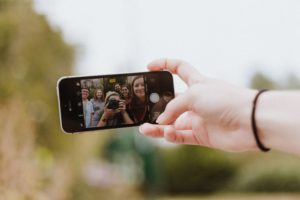
Thus, we are trying to capture this moment in history by harnessing the power of technology for social good. Through short videos posted on Flipgrid (a social learning platform designed for video discussion forums), we are hoping to create community while also collecting stories from social work students. We hope these stories can help us support and learn from each other during a time of social distancing as well as provide a source of information for future ways to prepare students and educators for these types of crises (i.e. what are the best ways to learn remotely as a social work student or how do I stay connected with my friends and peers from school). We anticipate that these videos will provide a wealth of information for blogs posts or other scholarship that will inform how social work needs to adapt to complex social problems. This might include qualitative thematic analysis or quotes from posts. Any peer-reviewed content will be anonymized, but please remember that these posts are a form of public social media.
Social Work in the Times of COVID-19: One way to share, document & support
The COVID-19 public emergency is unprecedented and affects our personal and professional lives. From trying to find diapers and toilet paper to figuring out how to work remotely with students and colleagues, few of us were prepared for the speed of which this emergency changed our daily lives. And we have yet to know and understand what things will look like in the next few weeks or months.
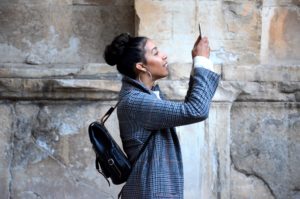
Thus, we are trying to capture this moment in history by harnessing the power of technology for social good. Through short videos posted on Flipgrid (a social learning platform designed for video discussion forums), we are hoping to create community while also collecting our stories as social workers (practitioners and educators). We hope these stories can help us support and learn from each other during a time of social distancing as well as provide a source of information for future directions for the profession (i.e. what are the best ways to work remotely as a social worker or what are best practices for transitioning learning to online environments). We anticipate that these videos will provide a wealth of information for blogs posts or other scholarship that will inform how social work needs to adapt to complex social problems. This might include qualitative thematic analysis or quotes from posts. Any peer-reviewed content will be anonymized, but please remember that these posts are a form of public social media.
Podcast Assignment for the Social Work Classroom
Editor’s Note: This blog post shares information about a podcast assignment developed and implemented in multiple social work classrooms over the past year. This assignment is a collaboration between myself and Melanie Sage, Todd Sage & Michael Lynch of the University at Buffalo’s School of Social Work. We share a copy of the assignment and rubric along with information about why social work educators might want to try this assignment in their own classroom.

Podcasts are now a well-known part of social work education. With so many different types of social work podcasts, it is easy for an educator to assign a podcast instead of an article, asking students to listen instead of reading. Examples of podcasts designed specifically for social work include:
- The Social Work Podcast by Dr. Jonathan Singer
- inSocial Work Podcast Series by the University at Buffalo’s School of Social Work
For a more comprehensive list of podcasts, check out this blog post written by one of us (Melanie):
Briefly, a podcast is an audio file made available on the Internet for downloading to a portable media player, computer, or other device. Podcasts are easy to create and do not require many technical skills which making the technology a good fit for student assignment and for faculty who do not have a lot of technology experience. One of us (Laurel) has been using and writing about podcast assignments for several years. Here are links to a series of posts she wrote back in 2014 when she first started using podcasts in her classroom:
Review of Teaching & Learning in Social Work for 2019
It is that time of year again – the annual review of the Teaching & Learning in Social Work Blog. This will be my fourth year reflecting on the work of this blog; the first end of the year post was in 2016. This year, I am thinking more about my motivation for starting and maintaining this blog for the past seven years. As I think back on why I started Teaching & Learning in Social Work, I’d have to say I wanted to be a more confident writer. Academic writing is not easy. This blog helped me to find my academic voice while allowing me to experiment with writing. I try to be personable in the posts I write, using plain language and concise phrasing. While I can say I am more comfortable with my professional writing, the greatest benefit to this blog is having space to share my work and the work of others in a very non-traditional space. Publishing is a peer-reviewed journal is currency for academics, and it is a narrow, rigid, and polished way to share one’s work. By writing blog posts about my work early in the process, I can share with a wider audience including students, social work practitioners and professionals from other fields. I can also as publish work that may never find a home as a journal article, but is still of value to others. For example, I write frequently about my assignments and classroom activities on this blog. I also post information about my conference presentations here so others can easily reference the materials. Overall, I can say with confidence that writing and publishing Teaching & Learning in Social Work has truly be beneficial and motivating for my academic writing.
For 2019, I had three goals for improving the blog:

Teaching & Learning in Social Work by Laurel Iverson Hitchcock is licensed under a Creative Commons Attribution-NonCommercial-ShareAlike 4.0 International License