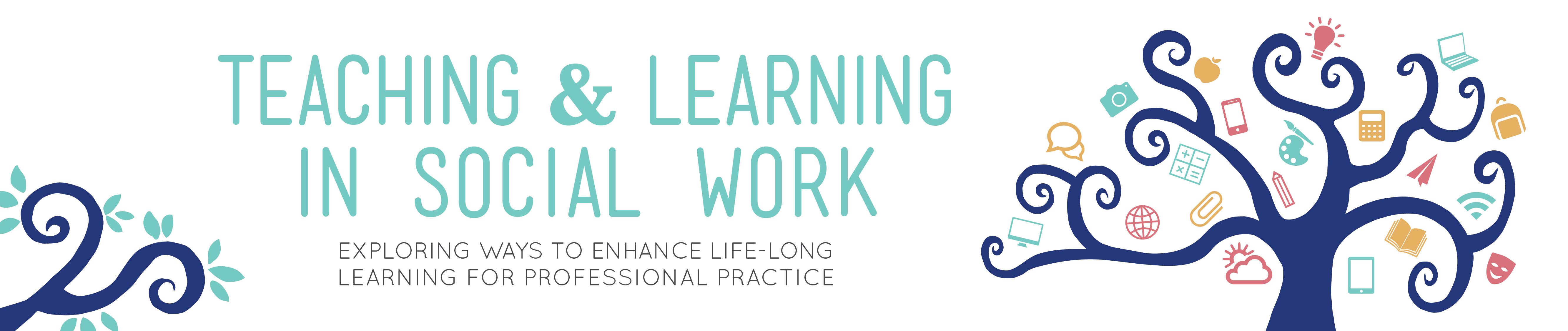
The unprecedented shift into teleworking; a personal story about working remotely in social work education
Editor’s Note: Agata Dera, MSW, is an Associate and LiveSupport Specialist with the Columbia School of Social Work’s (CSW) Online Campus, where she works with social work faculty and students in online courses to optimize the digital learning environment. In this post, she discussed how she transitioned from an office space to remote working. As many of us are working at home because of the COVID19 pandemic, Agata offers practical suggestions and encouragement to this new way of working for many social work professionals. You can connect with Agata on Twitter at @agataddera.

Over the past few weeks of this year, as the world stands together in the face of a pandemic, I have witnessed so many of my colleagues experience an unprecedented shift to working from home. As according to Forbes (Eisenberg, 2020), it is likely that more than half of our workforce is now working remotely, I cannot help but to reminisce of my transition into a virtual workforce. I hope that by sharing my story with you, you will have the insight I wish I once had to enhance your productivity and overall success.
For the past several years, I have been solely working from home due to severe health issues. Working remotely provided me with the flexibility I needed to be able to recover from several major spinal cord surgeries while also continuing my professional career. I truly believe that for me, being able to work from home is a blessing as my career is such a big part of my identity.
Fostering a spirit of collaboration with Social Work Students during the COVID-19 Pandemic
Editor’s note: When COVID19 cases started rising in the US in March 2020, institutions of higher education made significant decisions that required instructors and students to pivot the delivery and design of courses almost overnight. In this blog post, an instructional team from Columbia University’s School of Social Work (CSSW) detail how they approached changes to their course using trauma-informed teaching strategies. The team consists of Matthea Marquart, Director of CSSW’s Online MSW Program, Katherine Seibel, Legislative and Policy Analyst at a nonprofit promoting young people’s wellbeing, and Nicole Wong, Director of Support, Advocacy, & Violence Prevention at Vassar College. For more information related to this post, please reach out to Matthea at @MattheaMarquart.
Our spring semester online course, which is part of Columbia University School of Social Work’s (CSSW) Master’s of Science in Social Work program, began in March 2020, with our first class session on March 10. The next day, the World Health Organization declared COVID-19 a pandemic, and the next week was spring break. Columbia University, which is located in New York City, had already been taking steps to protect student safety, such as moving residential courses online, but our course was already online, with our students located across the United States.
As a result, the policy impact that most affected our course came with the University’s announcement on March 20 that all spring semester courses would be graded pass/fail. This policy impact freed us to make significant changes to our course assignments and grading policies mid-semester, in collaboration with each other as the instructional team, as well as with the students. We also implemented trauma-informed teaching strategies in response to the changing circumstances in the world, which had a significant impact on students and which we recognized could contribute to increased experiences of trauma. Trauma-informed teaching recognizes that past and ongoing trauma can impact current student success, and employs strategies to foster a supportive environment and reduce barriers to learning. An example is sharing power with students through collaboration and choice about course decisions.
Virtual Field Education: Harnessing Technology and Campus Partnerships to Provide Learning Opportunities
Editor’s Note: In this blog post, Michael Lynch, Clinical Assistant Professor of Field Education at the University at Buffalo’s School of Social Work, shares how his field program shifted their curriculum from in-person, place-based learning activities to remote learning during the national quarantine from the COVID19 pandemic in March 2020. Specifically, he talks about how social work field programs can leverage partnerships and opportunities within their own institution to quickly meet the educational needs of field students. You can connect with Michael at mrlynch2@buffalo.edu
With the intensification of the global pandemic in March 2020, most higher education programs in the United States quickly switched all of their courses to a distance-learning model. This disruption has forced social work instructors to think creatively about how to deliver content and experiences in new ways. For social work field education programs, this transition poses additional difficulty due to its client-facing, experiential nature. For example, students in field education typically are intervening directly with clients in settings like schools, mental health clinics, prisons, and hospitals. Students provide counseling, mentorship, and other forms of support directly to clients in an in-person environment.
Academic and Professional Blogging
Editor’s Note: This post is one in a series about how technology can be used to develop and sustain one’s professional network. The idea for this post came from a think tank hosted by the University at Buffalo’s School of Social Work in June 2019, looking for a way to teach students in their new online Doctorate of Social Program (DSW) program about how to develop key stakeholder networks in relation to a substantive topic area. In this series, we are exploring the concept of a Professional Collaboration Network (PCN), which are technology-mediated user-centered relationship constellations designed to enhance or enrich connections, knowledge, and professional opportunities. This post reviews how academic and professional blogging can be used to share and curate information for practice communities.

Blogs, and the act of blogging, have come a long way since the mid 1990’s when they essentially performed as personal journals published on the internet; they are now often fully fledged outlets for journalism, advocacy, and academic research (Smith, 2010, Kanter and Fine, 2010, Kirkup, 2010, Rosenberg, 2009). Although some may feel that blogging has become passé in the current and crowded social media landscape, others would argue blogging is alive and well (Fiesler, 2019; Perry, 2015). The main goal of this blog post is to describe why and how academic blogging can help contribute to your Professional Collaboration Network (PCN), and offer some basic tips for getting started. To learn more about PCNs, please read this post:
Today most people know what a blog is; in fact ,you are staring at one right now. The bigger question as academics or professionals is why would we want to develop/maintain a blog? Here we dive into just a few of the many answers to this question:

Teaching & Learning in Social Work by Laurel Iverson Hitchcock is licensed under a Creative Commons Attribution-NonCommercial-ShareAlike 4.0 International License